



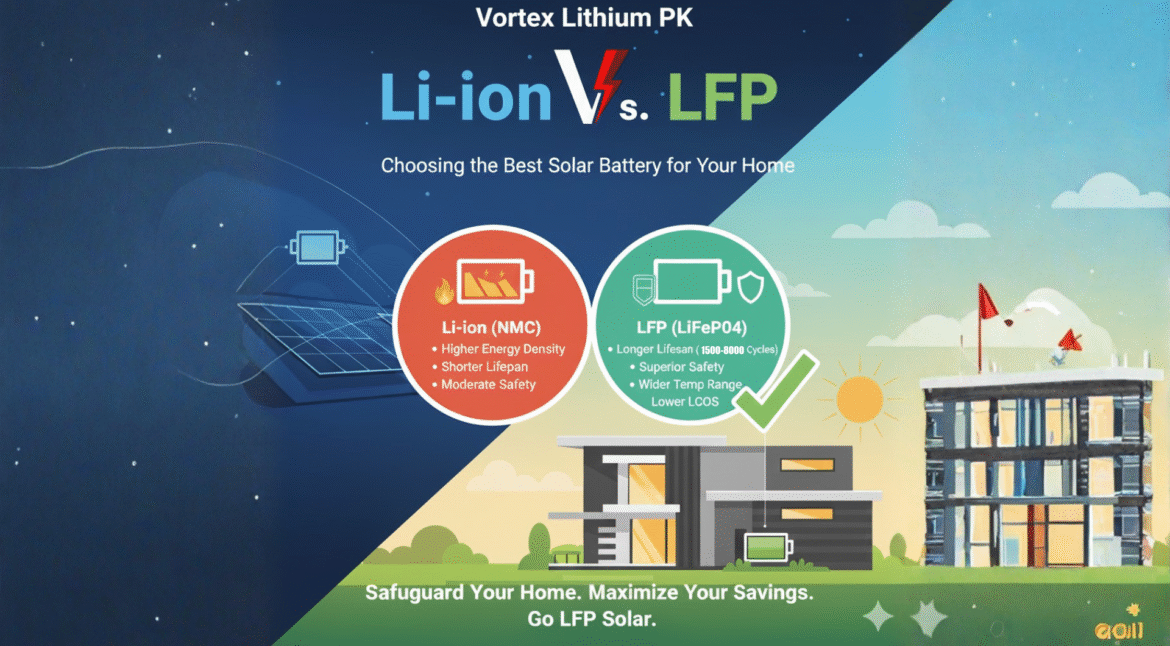
When building a solar energy storage system, the heart of the matter lies in the battery. While both are part of the larger Lithium-ion (Li-ion) family, the two primary chemistries dominating the residential solar market are the general category of Li-ion (often referring to Nickel-Manganese-Cobalt or NMC) and Lithium Iron Phosphate (LFP).
The choice between them comes down to a trade-off between energy density (how much energy you can store) and safety/longevity (how long and safely it will last). For solar energy storage, the scale is tipping heavily towards LFP.
The Core Chemical Difference
The fundamental distinction lies in the material used for the cathode, the positive electrode of the battery.
-
Li-ion (NMC/NCA): This general term often refers to batteries using a cathode that includes Nickel, Manganese, and Cobalt (NMC) or Nickel, Cobalt, and Aluminum (NCA). These materials enable higher energy density.
-
LFP (Lithium Iron Phosphate): This is a specific subtype of Li-ion chemistry using Lithium Iron Phosphate as its cathode material. The strong covalent bonds in this structure provide superior stability.
Head-to-Head Comparison: Li-ion (NMC) vs. LFP
Here’s how the two chemistries stack up across the most important factors for solar energy storage:
| Feature | Li-ion (NMC/NCA) | LFP (LiFePO4) | Impact on Solar Storage |
|---|---|---|---|
| Safety & Stability | Moderate; higher risk of thermal runaway/fire if damaged or overheated. | Excellent; highly stable and resistant to thermal runaway. | CRITICAL: High-safety LFP is preferred for home installation. |
| Cycle Life | Shorter (typically 1,000–2,000 cycles) | Much Longer (typically 3,000–10,000+ cycles) | Higher long-term value; LFP requires fewer replacements. |
| Energy Density | Higher (150–220 Wh/kg) | Lower (90–120 Wh/kg) | NMC is smaller/lighter, ideal for EVs but less critical for stationary home use. |
| Depth of Discharge (DoD) | Typically 80%–95% | Up to 100% | LFP lets you use virtually all the stored energy without damaging the battery. |
| Operating Temperature | Narrower range (e.g., 0°C to 45°C) | Wider range (e.g., -20°C to 60°C) | LFP is more versatile for installation in garages, sheds, or various climates. |
| Long-Term Cost | Lower initial cost, but higher Levelized Cost of Storage (LCOS) due to shorter life. | Higher initial cost, but Lower LCOS due to long cycle life and durability. | LFP is more cost-effective over the system’s lifetime. |
| Materials | Uses Cobalt and Nickel (metals with sourcing/ethical concerns). | Cobalt-free; uses abundant, less-toxic Iron and Phosphate. | LFP has a lower environmental and ethical footprint. |
Which is the Best Choice for Solar ?
For stationary solar energy storage—meaning home backup, self-consumption, and off-grid systems—Lithium Iron Phosphate (LFP) is the superior choice.
While Li-ion chemistries like NMC are highly popular for applications where size and weight are paramount (like Electric Vehicles and portable electronics), these factors are less important for a fixed installation in a home or garage.
Here’s a breakdown of why LFP is the clear frontrunner for solar:
1. Safety First, Always
Installed inside or near your home, safety is the top priority. LFP’s highly stable chemical structure resists the buildup of heat and is significantly less prone to thermal runaway (the self-perpetuating, rapid heating that leads to fire) even if the battery is overcharged or damaged. This provides much-needed peace of mind for residential owners.
2. A Lifetime Investment
Solar batteries are expected to last for years, cycling daily. The massive difference in cycle life is LFP’s biggest long-term advantage. A battery that lasts 3,000+ cycles instead of 1,000 cycles can potentially last two to three times longer in daily use, drastically reducing the total cost of ownership and the hassle of replacement.
3. Usable Power (Deep Discharge)
LFP batteries can be safely discharged to nearly 100% Depth of Discharge (DoD), meaning you can use almost all the stored energy every day without damaging the battery’s lifespan. Other Li-ion types typically recommend a lower DoD to preserve their health.
The Verdict: LFP Wins for the Home
In the solar storage debate, a battery that is safe, durable, and cost-effective over a decade will always trump one that is merely smaller and lighter. For homeowners and off-grid users, the superior safety and exceptional longevity of Lithium Iron Phosphate make it the definitive best choice for solar battery storage.